
Spray paint aerosol production requires more than standard liquid filling. In addition to paint filling, valve crimping and propellant charging, many spray paint products require a mixing ball inside the can so the formulation can be re-mixed before use.
The filling equipment therefore needs to be configured around the paint formulation, can and valve specifications, filling volume, propellant, required output and any additional processes such as automatic mixing-ball feeding. Depending on production requirements, manufacturers can use semi-automatic equipment, a standard automatic aerosol filling line or a high-speed production system.
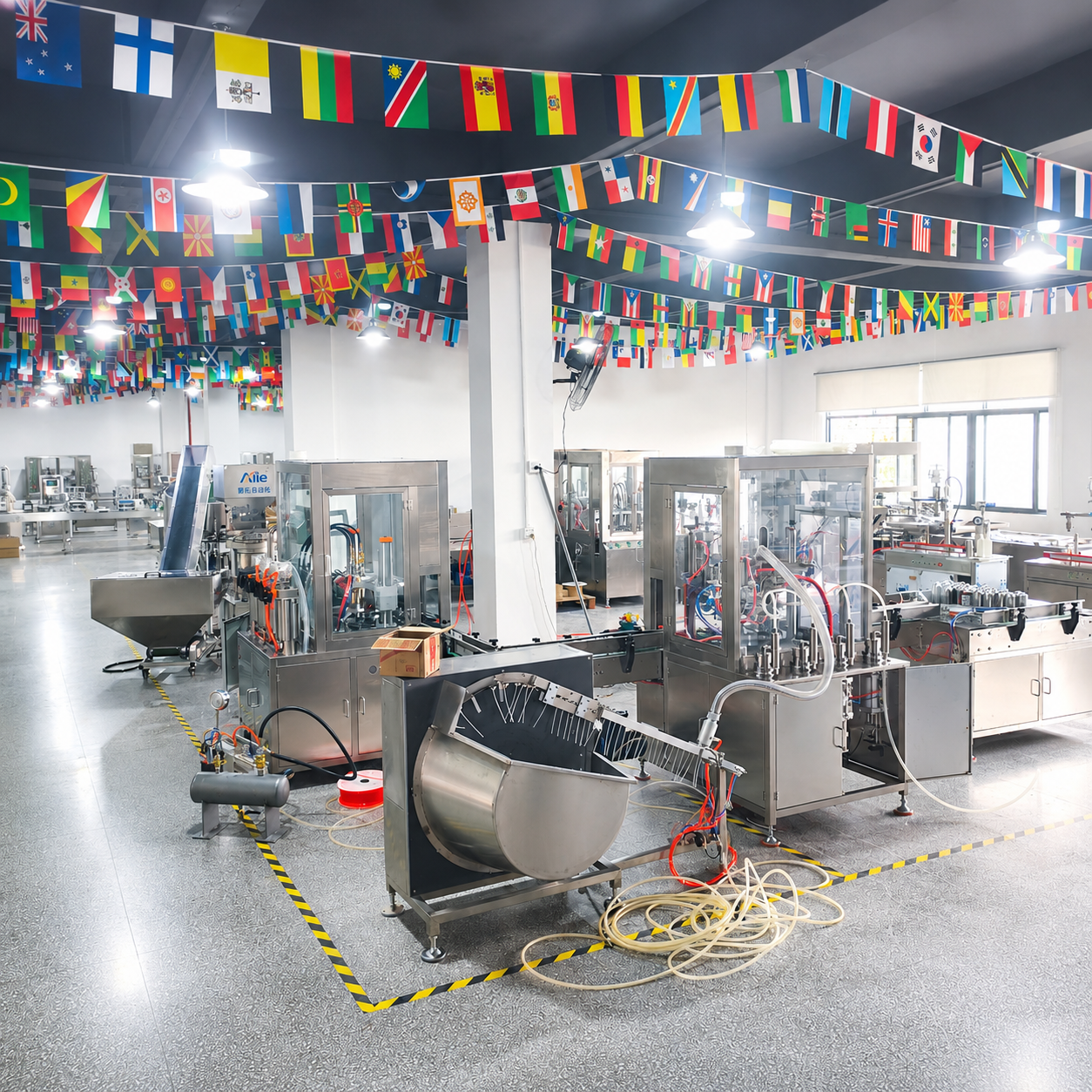
Chapter 1: How Is Spray Paint Aerosol Filled?
Unlike personal care or household sprays, producing spray paint aerosol involves handling dense pigments, solvent carriers, and heavy-duty agitation components. An engineered spray paint production cycle follows a distinct mechanical sequence:
- Can Feeding & Air Purging: Tinplate or aluminum aerosol cans are fed onto the conveyor and cleaned with ionized air to remove internal dust.
- Mixing Ball Feeding: Glass beads or steel agitation balls are dropped into the empty aerosol container before liquid filling.
- Paint Liquid Dosing: High-precision piston fillers dose the exact formulation volume into the container without splashing the can curl.
- Valve Placement: 1-inch aerosol valves with extended dip tubes are inserted into the can mouth.
- Valve Crimping: Mechanical collet crimping heads seal the valve cup tightly onto the container opening.
- Propellant Gas Charging: Liquefied hydrocarbon propellants (such as LPG or DME) are metered into the sealed can under high hydraulic pressure.
- Water Bath Leak Testing & Checkweighing: Pressurized cans are submerged in a warm water bath to detect micro-leaks, followed by inline weight verification.
- Actuator & Cap Placement: Spray nozzles and protective overcaps are automatically pressed onto the valve stem.
Chapter 2: Why Spray Paint Requires Specialized Filling Equipment
Standard liquid filling machines designed for thin mists or water-based formulas often struggle with spray paints. Engineering a reliable spray paint aerosol filling line requires resolving several specific physical challenges:
- Pigment Settling & Rheology: Paint concentrates contain heavy metallic pigments and synthetic resins that settle quickly during storage, demanding agitation balls and continuous fluid circulation in holding tanks.
- Solvent Volatility: Solvents like acetone, toluene, and xylene evaporate readily and require vapor-sealed fluid passages, anti-drip cut-off nozzles, and explosion-proof mechanical drives.
- Color Changeover Demands: Many contract fillers produce dozens of color SKUs per shift. Equipment must feature sanitary SUS304/SUS316 quick-release dosing cylinders to minimize cleaning solvent consumption and downtime.
- Propellant Compatibility: Propellant types and pressure ratios must be selected carefully to achieve optimal paint atomization without clogging nozzles.
Chapter 3: Mixing Ball Feeding for Spray Paint Aerosols
A defining characteristic of spray paint aerosols is the audible rattle inside the can. During storage, dense pigments and binders separate from the solvent base. The mixing ball (commonly made of glass or carbon steel) allows the consumer to agitate the paint thoroughly before spraying.
In high-volume manufacturing, manually dropping balls into every container introduces bottlenecks, foreign contamination, and the risk of missing balls. Incorporating an automatic glass ball feeding machine ensures reliable production flow:
- Sequence Placement: Agitation balls must be placed into the container before paint filling to prevent liquid splashing onto the can seam and curl.
- Missing-Ball Inspection: Advanced feeding stations utilize photoelectric sensors or high-precision tare-weighing cells to verify that every container receives its designated ball before entering the paint filler.
- Component Flexibility: Vibratory bowl sorters can be adapted for glass beads (typically 6mm–12mm) or metallic balls depending on paint chemistry and corrosion considerations.
Chapter 4: Solvent Paint Dosing & Color Changeover
Precision liquid filling prevents valve leakage and spray defect complaints. AILE volumetric piston fillers are engineered specifically for solvent-based paints and industrial enamels:
- Volumetric Accuracy: Heavy-duty metering cylinders deliver filling accuracy within ±1%, preventing overfills and costly formulation waste.
- Explosion-Proof Mechanical Zones: The liquid filling zone employs fully pneumatic control systems and spark-isolated pneumatic logic to operate safely around volatile solvent fumes.
- Rapid Color Changeovers: Modular fluid manifolds and tool-free disassembly allow operators to flush lines and switch colors with minimal solvent consumption.
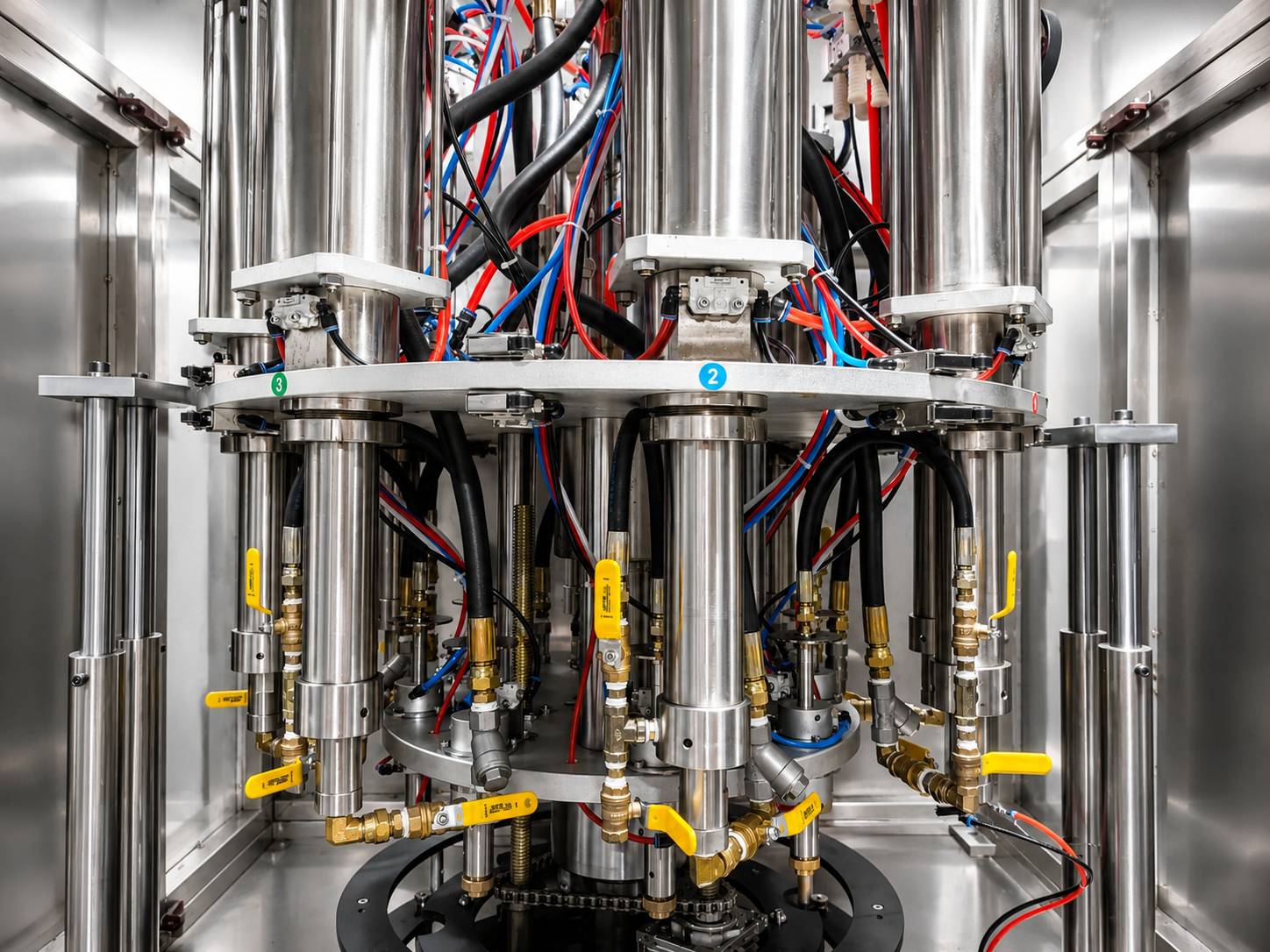
Chapter 5: Valve Crimping & Propellant Gas Charging
The pressurization phase is critical to consumer safety and long-term shelf performance. A spray paint aerosol requires precise mechanical crimping dimensions and stable propellant metering.
After the valve is placed, mechanical expanding collets crimp the 1-inch valve cup onto the can mouth. Consistent crimping diameter and depth help maintain pressure integrity across temperature variations. Next, liquefied propellant gas is metered into the container:
- For batch production and pilot workshops, explore our standalone semi-automatic aerosol propellant gas filling machine.
- For formulation guidance on LPG, DME, and compressed gases, read our technical comparison on LPG vs DME vs N2 vs CO2 aerosol propellants.
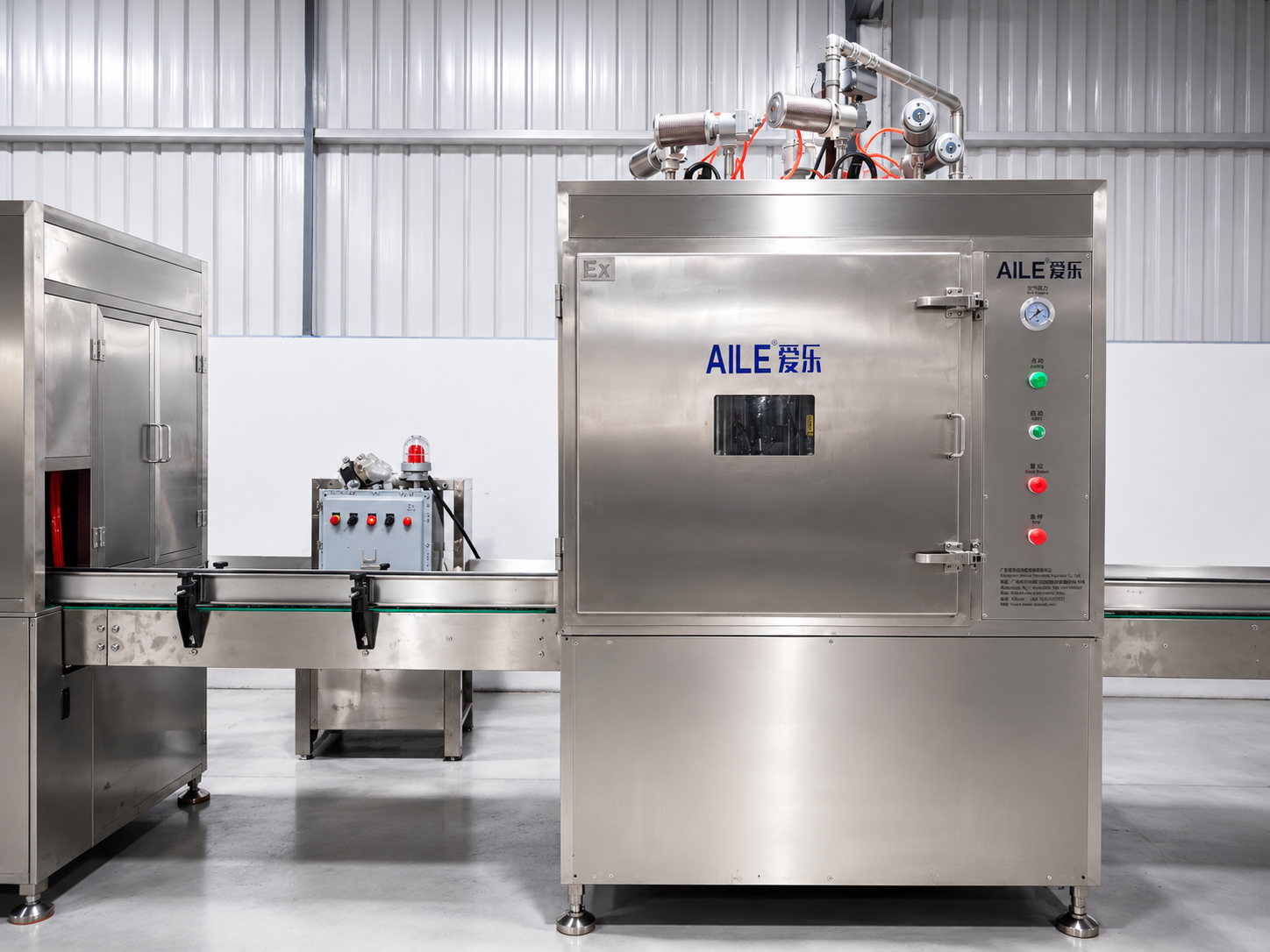
Chapter 6: Semi-Automatic vs. Automatic Equipment Configurations
The right level of automation depends on your batch sizes, number of paint color variations, and daily production targets:
| Equipment Configuration | Typical AILE Capacity | Key Line Features | Recommended Application |
|---|---|---|---|
| Semi-Automatic Workstation | 500–700 CPH | Modular stations; manual ball feeding and can transfer | Small batches, custom color matching, pilot workshops |
| Standard Rotary Line | 2,400–3,600 CPH | Auto ball dropper, 2-head paint filler, auto gas crimper | Growing brands, medium-scale continuous production |
| High-Speed Production Line | 4,800–7,200 CPH | Dual ball sorters, multi-head filling, inline water bath | Large-scale contract fillers, major regional paint brands |
To evaluate equipment configurations in detail, review our semi-automatic aerosol filling machine, explore the standard aerosol filling line, or inspect our complete range of aerosol filling lines.
Chapter 7: Project Examples & Engineering Experience
AILE has engineered and commissioned spray paint packaging systems for paint manufacturers across Europe, South America, the Middle East, and the Asia-Pacific region:
- High-Speed Production Systems (Australia): Delivered complete 120 CPM dual-track automatic spray paint lines equipped with automated glass ball sorters, inline explosion-proof paint dosing, and automated water-bath leak detection to handle continuous national distribution.
- Multi-Color Flexible Lines (Eastern Europe & Turkey): Configured standard 60 CPM indexing rotary lines designed with quick-disconnect fluid lines and interchangeable puck tooling, allowing fast changeover between primer, enamel, and lacquer batches.
Chapter 8: What Information to Confirm for Machine Selection
Before selecting machine models or ordering custom tooling, confirming your packaging dimensions and chemical parameters ensures an accurate layout. For a comprehensive inquiry guide, consult our guide on how to choose an aerosol filling machine and verify the parameters in our aerosol filling machine RFQ checklist:
- Paint Characteristics: Base solvent type (acrylic, enamel, synthetic resin), viscosity (CPS), and specific gravity.
- Agitation Ball Requirements: Ball material (glass or steel), diameter, and quantity per can.
- Aerosol Can Specifications: Material (tinplate or aluminum), container diameter, and total height.
- Valve & Actuator Dimensions: Standard 1-inch valve cup, stem size, and spray cap profile.
- Target Output: Desired cans per hour (CPH) for initial launch versus planned phase-two expansion.
- Changeover Frequency: Average number of color SKUs processed per shift.
Chapter 9: FAQ About Spray Paint Aerosol Production
Why is a mixing ball dropped before liquid paint filling?
Dropping the mixing ball into an empty dry container prevents liquid paint from splashing out. Splashed paint on the container curl can compromise valve crimping airtightness.
How do filling machines handle high-viscosity paints without clogging?
Piston dosing cylinders utilize positive-displacement force, pneumatic cut-off valves, and anti-stringing nozzles. For heavy formulations, recirculating buffer tanks keep the paint agitated to prevent sedimentation.
Can one spray paint line process both 200ml and 400ml cans?
Yes. By utilizing adjustable conveyor rails, modular starwheel pucks, and stroke-adjustable piston cylinders, changeovers between common can diameters and heights can be completed within 30 to 45 minutes.
What safety configurations are required for propellant gassing?
Propellant charging stations use pneumatic controls without electrical switches in the hazardous zone. Enclosed gassing booths are connected to continuous forced-air exhaust ducting to remove fugitive hydrocarbon vapors.
Conclusion
Selecting the right spray paint aerosol filling equipment requires matching machinery to formulation viscosity, solvent characteristics, can geometry, and agitation requirements. Whether starting with a flexible semi-automatic setup or commissioning a high-speed automatic production line, AILE provides tailored engineering solutions built for reliable operation and workplace safety.
Ready to Configure Your Spray Paint Aerosol Line?
Contact our engineering specialists today with your paint formulation, can dimensions, target CPH, and facility specifications for a detailed technical proposal.
Request a Machine Quotation