
Choosing an aerosol propellant is not only a formulation decision.
It can also change:
- The gas filling method
- Required pressure-control system
- Propellant supply arrangement
- Machine configuration
- Safety requirements
- Valve and package compatibility
- Production-line layout
This is especially important when a manufacturer is comparing LPG, DME, nitrogen (N₂) and carbon dioxide (CO₂).
These four propellants do not all behave in the same way. Aerosol propellants can generally be divided into two broad groups:
- Liquefied propellants: such as LPG and DME
- Compressed gases: such as N₂ and CO₂
The European Aerosol Federation also distinguishes aerosol propellants between liquefied and compressed gases. Liquefied gases can act as both propellant and co-solvent, while compressed gases create pressure in a different way.
For equipment buyers, the practical question is therefore:
If the propellant changes, does the filling equipment also need to change?
In many cases, the answer is yes—or at least the equipment configuration needs to be reviewed.
1. Quick Comparison: LPG vs DME vs N₂ vs CO₂
| Propellant | Propellant Type | Main Equipment Impact | Key Project Consideration |
|---|---|---|---|
| LPG | Liquefied gas | Requires suitable liquefied-gas filling configuration | Flammability and explosion-proof production considerations |
| DME | Liquefied gas | Requires compatible filling configuration and formulation review | Product compatibility and safety configuration |
| Nitrogen (N₂) | Compressed gas | Requires compressed-gas charging and pressure control | Gas supply pressure and package operating pressure |
| Carbon Dioxide (CO₂) | Compressed gas | Requires compressed-gas charging and project-specific pressure control | Filling amount, pressure and product/package compatibility |
The final equipment configuration should not be selected by propellant name alone. It also depends on:
- Product formulation
- Propellant filling amount
- Aerosol can specification
- Valve
- Target production capacity
- Required finished-can pressure
- Destination-market safety requirements
2. LPG Aerosol Filling Equipment
LPG is a commonly used liquefied hydrocarbon aerosol propellant. Because it is stored as a liquefied gas under pressure, the filling system must be configured to handle the required propellant supply and charging process.
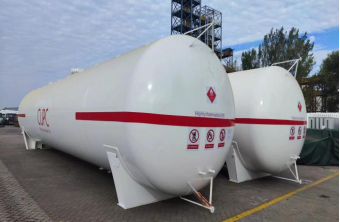
From an equipment perspective, manufacturers should consider:
- Propellant storage and supply arrangement
- Gas filling method
- Required filling amount
- Production capacity
- Flammable-gas safety
- Explosion-proof equipment requirements
- Workshop ventilation and production-area design
The safety aspect is particularly important because LPG is flammable. AILE can provide aerosol filling equipment with explosion-proof configurations and related certification for applicable projects.
For standalone or semi-automatic LPG filling projects, see AILE's aerosol propellant filling machine.
AILE propellant filling equipment can be configured according to the required gas filling amount, production capacity and overall aerosol production process.
3. DME Aerosol Filling Equipment
DME is also a liquefied aerosol propellant. However, manufacturers should not assume that DME and LPG are automatically interchangeable simply because both belong to the liquefied-propellant category.
Liquefied aerosol propellants can also interact with the formulation as co-solvents, meaning that the final product system should be considered together rather than treating the propellant only as a pressure source.
For DME projects, equipment selection should consider:
- Product formulation
- Propellant filling amount
- Material compatibility
- Filling process
- Required production capacity
- Flammable-gas safety requirements
The equipment itself may look similar to an LPG project, but the final filling configuration should still be confirmed using the actual formulation and package.
A factory planning to change from LPG to DME should therefore not simply replace the gas supply and assume that all existing machine settings will remain suitable. The product, valve, can and filling process should be reviewed together.
4. Nitrogen Filling Uses a Different Gas System
Nitrogen is a compressed gas rather than a liquefied propellant. This difference changes the way pressure is created inside the aerosol container.
For equipment planning, nitrogen projects typically require attention to:
- Compressed-gas supply
- Pressure regulation
- Gas charging method
- Required final pressure
- Can and valve compatibility
- Filling consistency
Compressed gas systems can behave differently from liquefied-propellant aerosols during product use because the gas pressure changes as the internal headspace changes. Industry sources also identify nitrogen as one of the principal compressed gases used in aerosol systems.
This does not mean nitrogen is better or worse than LPG. It means:
Nitrogen should be treated as a different filling project from a standard liquefied-gas aerosol line.
The gas supply and pressure-control arrangement should therefore be confirmed before the equipment is selected.
5. CO₂ Filling: Compressed Gas, but Not Automatically the Same as N₂
CO₂ also belongs to the compressed-gas category. However, nitrogen and CO₂ should not automatically be treated as identical filling projects.
When configuring CO₂ aerosol filling equipment, manufacturers should consider:
- Required CO₂ filling amount
- Gas supply method
- Pressure-control requirements
- Product formulation
- Can specification
- Valve specification
- Finished-package operating conditions
The final equipment configuration depends on the complete package rather than the gas name alone. For this reason, manufacturers planning to move from LPG to CO₂—or from N₂ to CO₂—should have the existing filling system reviewed first.
Possible changes may involve:
- Gas supply arrangement
- Pressure-control components
- Filling settings
- Production process
- Safety configuration
The important point is that changing propellant does not always mean replacing the entire filling machine, but it should never be assumed that the existing setup can be reused without evaluation.
6. Liquefied Propellant vs Compressed Gas: Why the Filling Equipment Differs
The most important technical distinction in this comparison is:
LPG / DME
These are liquefied propellants.
N₂ / CO₂
These are compressed gases.
This difference affects how pressure is generated and maintained inside the aerosol package. Aerosol industry guidance explains that an aerosol package may use either liquefied or compressed gas as the driving force that dispenses the product.
For equipment buyers, this means the following areas may change:
| Equipment Factor | Liquefied Propellant | Compressed Gas |
|---|---|---|
| Gas supply system | Designed for liquefied propellant handling | Designed for compressed-gas supply |
| Pressure control | Configured around the selected liquefied propellant | Greater emphasis on controlled gas charging pressure |
| Safety focus | Flammable-gas considerations for LPG/DME | High-pressure gas handling and package pressure control |
| Machine setup | Based on propellant charge and production process | Based on target pressure, gas amount and package |
| Package validation | Can, valve and formulation compatibility required | Can, valve and pressure compatibility required |
This is why asking only: “How many grams of gas can this machine fill?” is not enough to select the correct propellant filling equipment.
7. Does Propellant Choice Affect the Aerosol Valve?
It can. The aerosol valve is not only a closing component. It keeps the container sealed and controls product discharge during use. The European Aerosol Federation identifies the valve as a critical part of the aerosol package and notes that the content and intended use influence package-component selection.
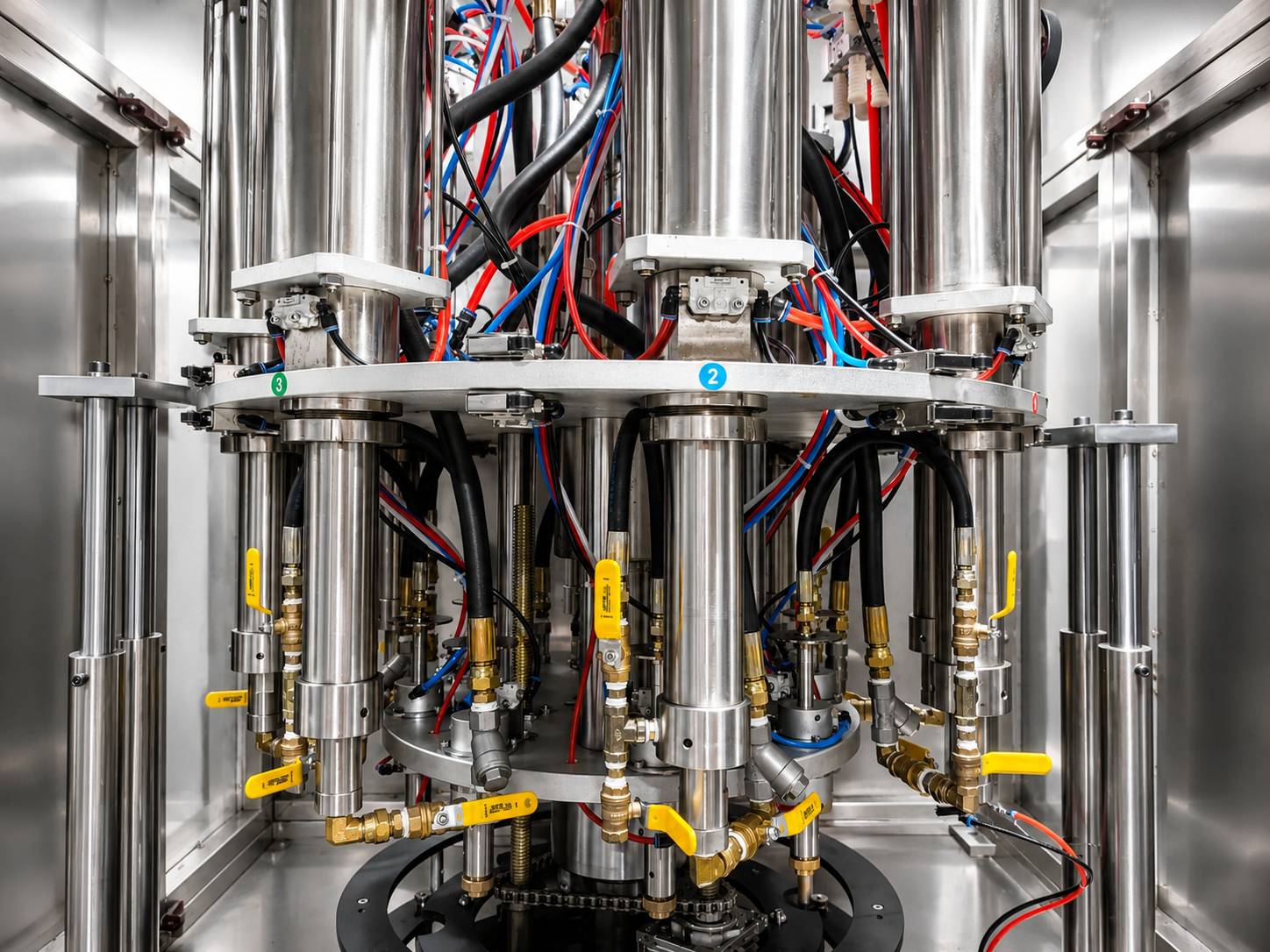
When a propellant changes, manufacturers should re-confirm:
- Valve specification
- Can specification
- Product formulation
- Target internal pressure
- Actuator
- Required spray performance
- Filling process
This does not mean that every propellant requires a completely different valve. It means the existing valve should not automatically be assumed to remain suitable after a major propellant change.
For new projects, AILE recommends providing actual cans and valves before final equipment setup.
8. Can the Same Aerosol Filling Machine Fill LPG, DME, N₂ and CO₂?
Not automatically. The machine may need a different:
- Gas supply arrangement
- Pressure-control configuration
- Filling setting
- Gas filling head or related components
- Safety configuration
The scale of the required change depends on the original machine design and the new propellant. A useful way to evaluate a change is:
| Propellant Change | Equipment Review Needed? |
|---|---|
| LPG → DME | Yes |
| LPG → N₂ | Yes |
| LPG → CO₂ | Yes |
| DME → N₂ | Yes |
| N₂ → CO₂ | Yes |
| Same propellant, different filling amount | Usually yes |
| Same propellant, different can or valve | Compatibility should be reconfirmed |
The review does not necessarily mean the whole machine must be replaced. The goal is to confirm which components, settings or gas-supply systems need to change before production begins.
9. How Propellant Choice Changes Safety Requirements
Safety is one of the biggest differences between propellant projects.
LPG and DME
LPG and DME are flammable propellants. Equipment and production planning should therefore consider:
- Explosion-proof equipment requirements
- Gas handling
- Workshop ventilation
- Production-area safety
- Local regulations
- Propellant storage and supply
AILE can provide explosion-proof equipment configurations and related certification for applicable aerosol filling projects. The exact certification and safety configuration should be confirmed according to the destination country and final project.
N₂ and CO₂
N₂ and CO₂ are used as compressed gases. Although they do not create the same flammability issue as LPG or DME, pressure management remains important.
The project should still confirm:
- Gas supply pressure
- Pressure regulation
- Can pressure capability
- Valve compatibility
- Filling process
- Leak testing requirements
Aerosols are pressurized packages, so package integrity remains important regardless of which propellant is used. UNECE dangerous-goods requirements treat filled aerosols as pressurized articles and include leak-tightness and pressure-testing requirements for aerosol dispensers.
10. Does Propellant Choice Affect Leak Testing?
Yes, because the finished aerosol package is pressurized. After filling, manufacturers need to confirm that the aerosol can remains leak-tight and stable under the applicable test conditions.

UNECE guidance for aerosol dispensers includes hot-water bath leak testing and, under defined conditions, approved equivalent test methods.
For production-line planning, this means the final propellant and operating pressure should be considered together with:
- Crimping quality
- Can integrity
- Leak testing
- Quality-control process
The exact test conditions should follow the applicable destination-market regulation rather than using one universal temperature or pressure for every project.
11. Which Propellant Is Used for Different Aerosol Products?
There is no single propellant that is automatically correct for every product. The final choice depends primarily on the formulation, desired spray behavior, packaging and market requirements.
| Aerosol Application | Propellant Direction |
|---|---|
| Lubricant aerosol | LPG, DME or compressed gas depending on formulation |
| Deodorant / body spray | Depends on formulation, spray performance and market requirements |
| Hairspray | Depends on formulation and product requirements |
| Bag-on-Valve products | Commonly use compressed gas outside the product bag |
| Technical aerosols | Strongly dependent on formulation and finished-product requirements |
This table should be treated as a project-planning reference rather than a formulation recommendation. AILE focuses on configuring the filling equipment around the confirmed product and propellant system.
12. What Information Should You Send Before Selecting Propellant Filling Equipment?
Before AILE recommends a propellant filling configuration, provide:
- Product name and application
- Basic formulation information
- Propellant type
- Liquid filling volume
- Propellant filling amount
- Aerosol can diameter and height
- Valve specification
- Target production capacity
- Destination country
- Required safety or certification requirements
For new or unusual projects, providing actual packaging materials is also useful. AILE can test aerosol cans, valves, filling operation, crimping, propellant filling, and finished package compatibility before shipment according to the confirmed project configuration.
Frequently Asked Questions
Can one machine fill LPG, DME, nitrogen and CO₂?
Not automatically. The filling method, gas supply, pressure-control system and safety configuration may differ between liquefied propellants and compressed gases. The existing machine should be reviewed before changing propellant.
Is LPG filling equipment the same as nitrogen filling equipment?
No. LPG is a liquefied propellant, while nitrogen is a compressed gas. This changes the gas supply and pressure-control requirements of the filling system.
Can I change from LPG to CO₂ without replacing the machine?
Possibly, but the equipment must be reviewed first. The gas supply system, pressure-control configuration, filling settings and related components may need to change. The answer depends on the original machine design.
Which propellants can AILE aerosol filling equipment handle?
AILE equipment can be configured for LPG, DME, N₂, and CO₂. The final configuration depends on the product, propellant amount, can, valve and required capacity.
For propellant filling equipment details, see: AILE Semi-Automatic Propellant Gas Filling Machine.
Does the propellant affect the valve?
It can affect the complete aerosol package operating conditions. When the propellant changes, the valve, can, formulation and required pressure should be reconfirmed together.
Configure the Filling Equipment Around the Propellant — Not the Other Way Around
The key difference between LPG, DME, N₂ and CO₂ is not simply which gas is cheaper or more common. The selected propellant can affect filling method, gas supply, pressure control, safety configuration, valve and packaging compatibility, leak testing, and production-line design.
For this reason, aerosol filling equipment should be configured only after the product and propellant requirements have been confirmed.
Send AILE your product details, propellant type, can dimensions, valve specs, liquid filling volume, propellant filling amount, and target production capacity, and AILE can evaluate the required propellant filling configuration before quotation.
- For standalone and semi-automatic propellant filling equipment: https://global.aileaerosol.com/semi-automatic-aerosol-propellant-gas-filling-machine
- For complete aerosol filling lines: https://global.aileaerosol.com/aerosol-filling-lines
- For general aerosol filling machines: https://global.aileaerosol.com/aerosol-filling-machines
- For Bag-on-Valve equipment: https://global.aileaerosol.com/bag-on-valve-filling-machine
- For a broader machine-selection guide: https://global.aileaerosol.com/how-to-choose-an-aerosol-filling-machine
- For a complete production-line equipment checklist: https://global.aileaerosol.com/equipment-needed-for-aerosol-filling-line