
Chapter 1: What Is Bag on Valve (BOV)?
How Does Bag on Valve Work?
Bag on Valve (BOV) is an aerosol packaging system that physically separates the product from the pressure medium. The product is contained inside a flexible multi-layer bag attached to the valve, while compressed air or nitrogen is introduced into the space between the bag and the can.
To picture how a bag-on-valve works, imagine a toothpaste tube hidden inside a metal can. Instead of using your hands to squeeze the tube, the can is filled with pressurized air. When you press the spray button, that trapped air acts as an invisible hand, squeezing the bag from the outside and forcing the product out.
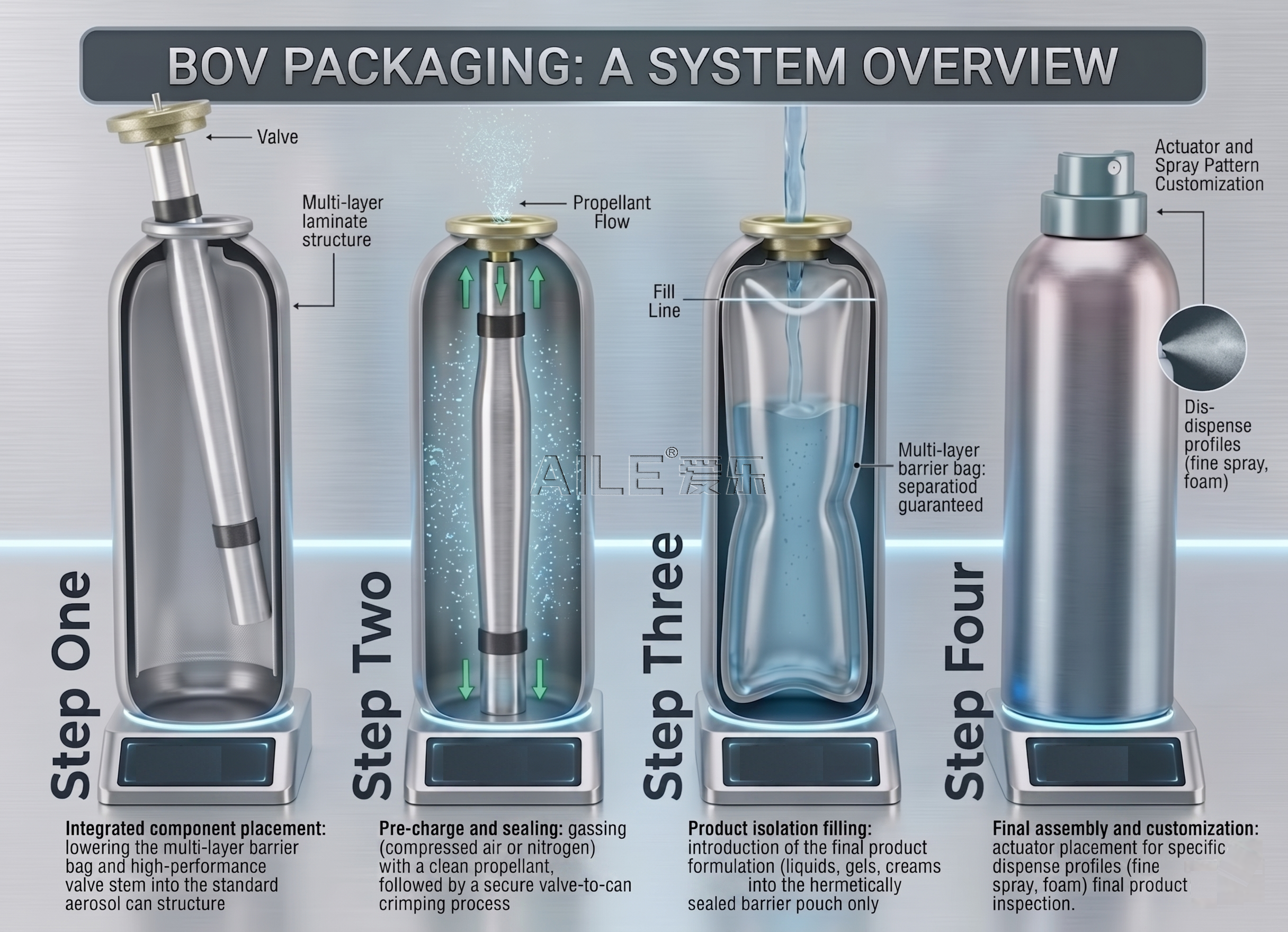
Sometimes referred to in the industry as a bag in valve, this barrier system keeps the product separated from the pressure medium throughout dispensing.
Chapter 2: BOV vs. Traditional Aerosol Packaging
Traditional aerosol and Bag on Valve packaging can both provide continuous dispensing, but the internal packaging structure and filling process are different.
| Feature | Traditional Aerosol | Bag on Valve (BOV) |
|---|---|---|
| Product & Propellant | Product and propellant share the same container space | Product is separated from the pressure medium by a flexible bag |
| Pressure Medium | Commonly LPG, DME or compressed gases depending on the product | Commonly compressed air or nitrogen |
| Product Contact | Formulation may be in direct contact with the propellant | Product remains isolated inside the bag |
| Spray Angle | Performance depends on the aerosol system and valve design | BOV systems can support continuous multi-angle spraying |
| Product Evacuation | Depends on formulation, propellant and packaging design | High product evacuation can be achieved with a properly designed BOV system |
| Suitable Products | Widely used for conventional aerosol products | Useful for products that benefit from product–propellant separation |
Chapter 3: Benefits of Bag on Valve Packaging
Product–Propellant Separation
The product remains inside the bag while compressed air or nitrogen stays outside it. This makes BOV useful for formulations where separation from the pressure medium is important.
Flexible Dispensing
Depending on the valve, actuator and product formulation, BOV packaging can support continuous and multi-angle dispensing.
Suitable for Different Product Types
BOV systems can be used for liquids, creams, gels and other formulations, although filling equipment and valve selection must be matched to the actual product.
Use of Compressed Air or Nitrogen
Unlike many traditional aerosol systems that use liquefied propellants such as LPG or DME, BOV commonly uses compressed air or nitrogen as the pressure medium.
Chapter 4: Common BOV Applications
Bag on Valve packaging can be used for a wide range of formulations, from fine mists to creams and gels. Whether BOV is suitable depends on the product, valve, bag and dispensing requirements.
Cosmetics & Personal Care: Products such as sunscreen sprays, facial mists and toners, shaving gels and other personal-care products can use BOV when product–pressure-medium separation is desirable.
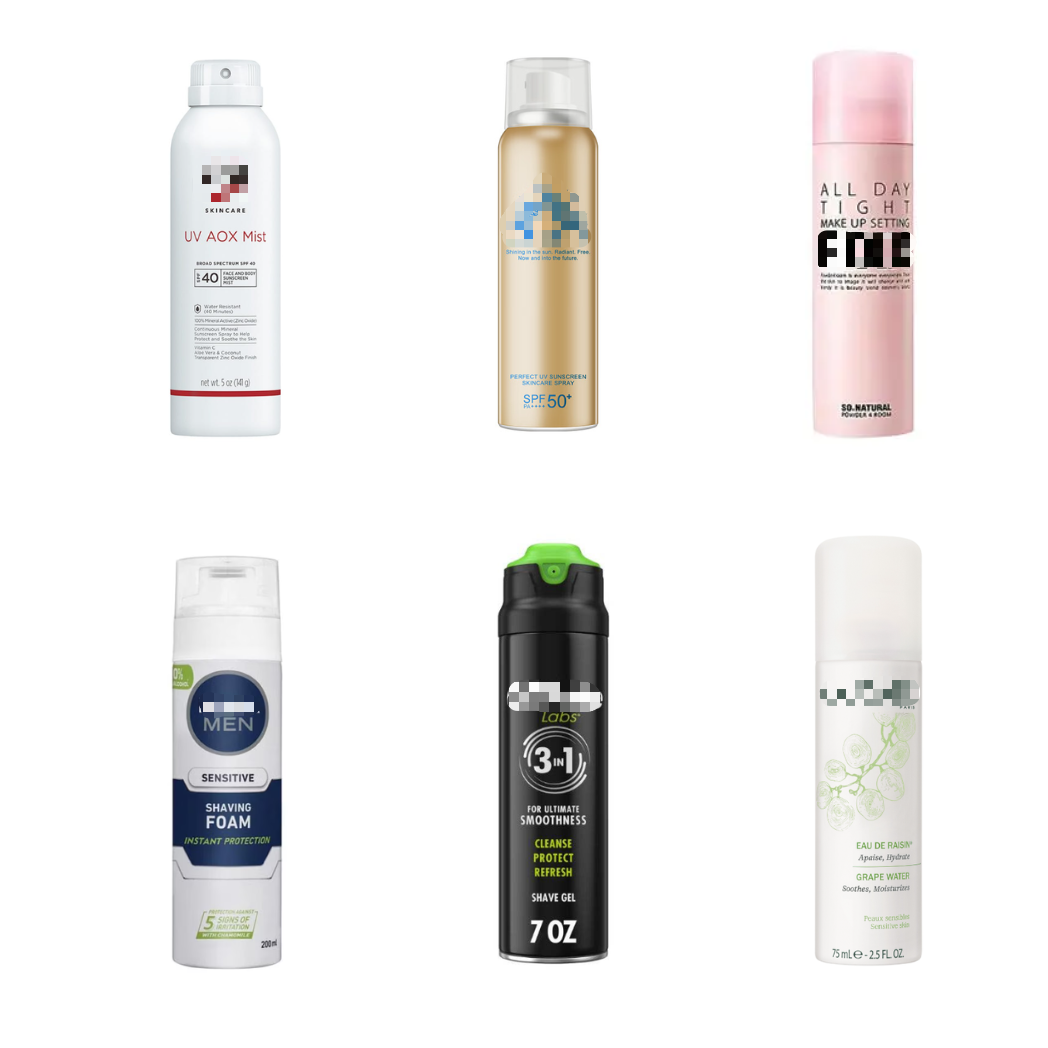
Healthcare & Pharmaceutical Products: BOV packaging is used for products such as saline sprays, wound-care sprays and other products where separation between the formulation and pressure medium is desirable. Equipment configuration, product-contact materials and filling requirements should be selected according to the specific product and production standard.
Food & Edible Oil Sprays: BOV can also be used for products such as edible oil sprays, where the product remains separated from the pressure medium during dispensing.
Household & Industrial Products: Selected air fresheners, cleaners and other household or industrial products may also use BOV, depending on the formulation and packaging requirements.
Chapter 5: The Manufacturing Side: How Are BOV Products Filled?
Because the bag is attached to the valve, BOV products require a filling sequence designed specifically for this packaging system.
The typical process includes three key steps:
1. Insertion: The BOV bag and valve assembly is placed into the aerosol can.
2. Under-Cup Gassing and Crimping: Compressed air or nitrogen is introduced into the space outside the bag while the valve is crimped onto the can.
3. Product Filling Through the Valve: The product is filled through the valve into the flexible bag inside the pressurized can.
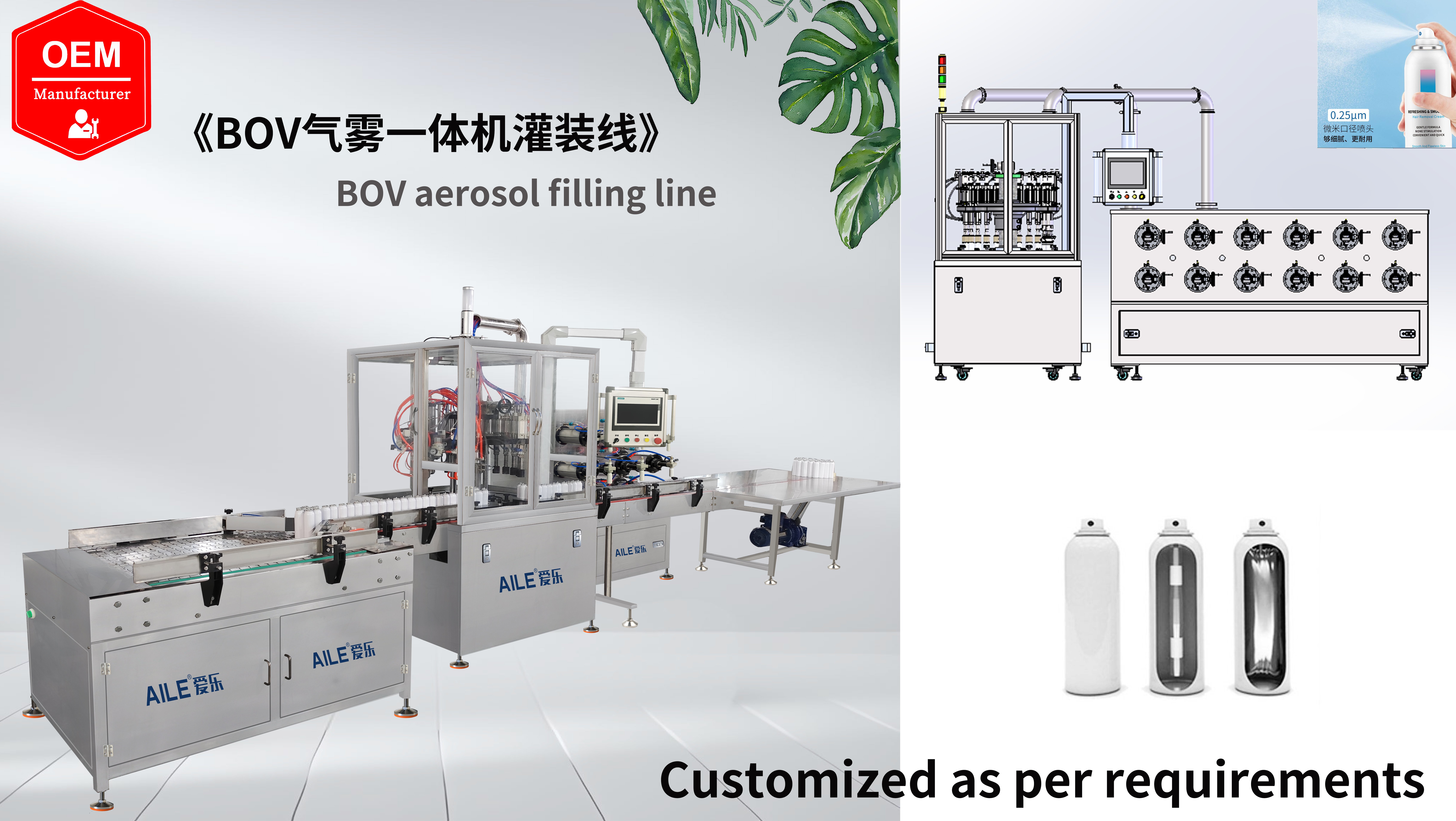
These steps require dedicated BOV filling equipment because pressure filling, valve crimping and product filling must work together with the specific can, valve and bag configuration.
Chapter 6: What BOV Filling Equipment Do Manufacturers Need?
Once the BOV filling process is understood, the next question for manufacturers is what equipment is needed for production.
The exact equipment configuration depends on the product, packaging format and required production capacity. Before selecting a BOV filling machine or production line, manufacturers should normally confirm:
- Product type and characteristics — such as liquid, cream, gel or other formulation characteristics.
- Filling volume — the required amount of product in each container.
- Can dimensions — including can diameter and height.
- BOV valve and bag specifications — the machine and tooling need to match the actual packaging components.
- Pressure medium — typically compressed air or nitrogen, depending on the product and packaging requirements.
- Required production capacity — different equipment configurations are suitable for different output requirements.
- Product-contact material requirements — the appropriate material should be selected according to the formulation and production requirements.
- Level of automation — semi-automatic equipment can offer greater flexibility for smaller production volumes or multiple SKUs, while fully automatic lines are better suited to higher and more continuous production requirements.
For manufacturers starting or expanding BOV production, the equipment can range from individual filling machines to a complete production line. The appropriate configuration should be selected according to the actual product, packaging format, target output and factory conditions.
AILE provides BOV filling machines and complete BOV aerosol filling lines for different production requirements.
Chapter 7: FAQ About Bag on Valve
What does BOV stand for?
What does a Bag on Valve system do?
What is the difference between BOV and traditional aerosol packaging?
What gas is used for Bag on Valve?
What products can use Bag on Valve packaging?
What equipment is needed to fill BOV aerosols?
Upgrade Your Production Line to BOV Technology
Looking for reliable Bag-on-Valve filling machinery? Contact our team with your product, can size, BOV valve and bag specifications, filling volume and required output for a suitable equipment configuration.
Get a BOV Filling Solution