
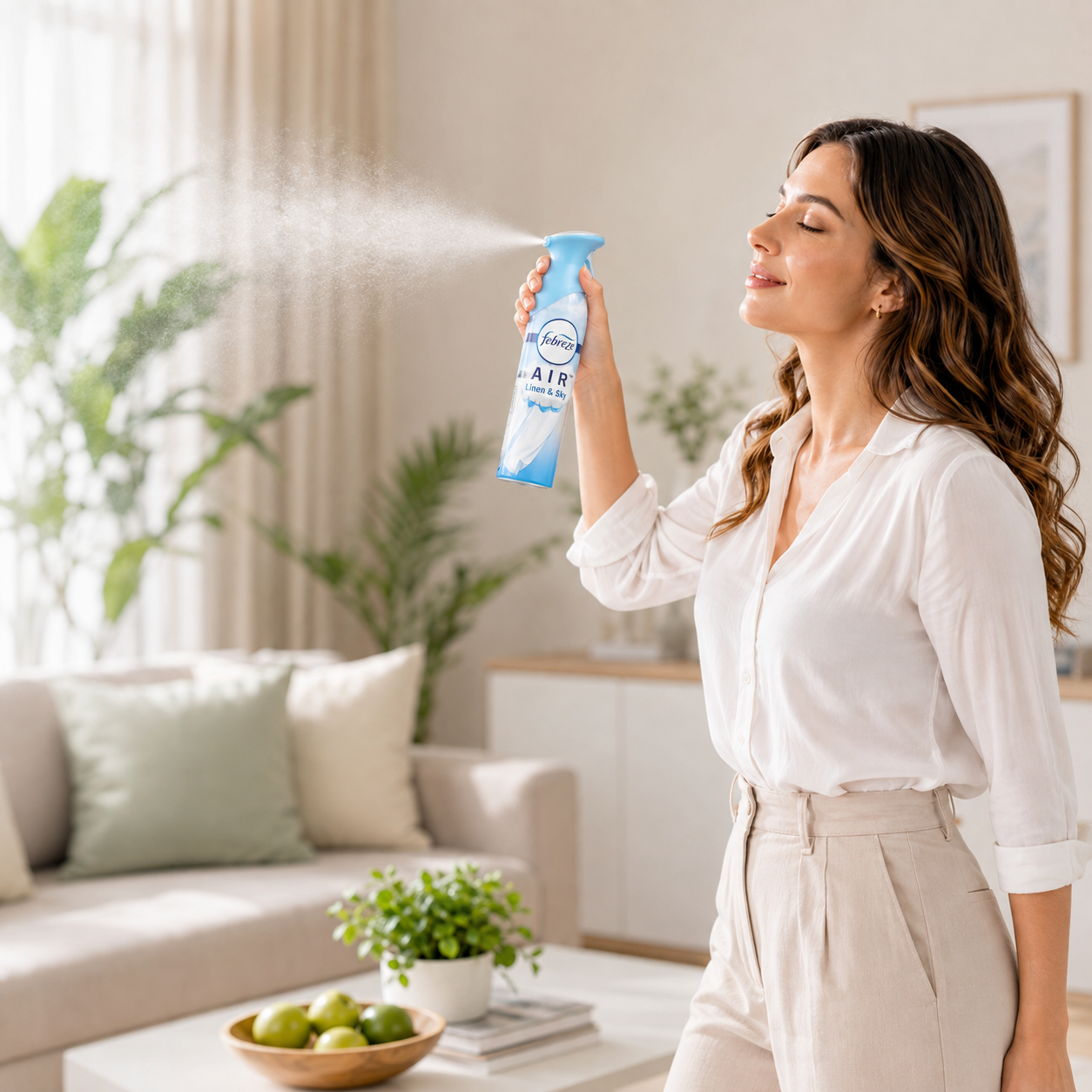
Air freshener aerosol production typically includes fragrance formulation filling, valve placement and crimping, propellant filling, and optional downstream processes such as water-bath leak testing, actuator placement and capping.
The equipment configuration depends on the product formulation, aerosol can and valve specifications, filling volume, propellant type, target output and required level of automation. AILE provides flexible semi-automatic workstations and high-speed automatic aerosol filling solutions engineered around your factory capacity.
Chapter 1: How Are Aerosol Air Fresheners Filled?
Air fresheners are among the most common commercial aerosol products, but their manufacturing requires consistent volumetric metering and hermetic pressure sealing to ensure a stable spray pattern throughout the product's lifespan. The standard automated filling process follows six sequential steps:
- Can Feeding & Air Purging: Empty tinplate or aluminum cans are loaded onto the indexing conveyor and blown with clean, dry air to eliminate shipping dust.
- Fragrance Liquid Filling: Positive-displacement volumetric piston pumps dose the liquid formulation (fragrance oils, solvents, or water-based mixtures) into the container.
- Valve Placement: Standard 1-inch (25.4mm) aerosol continuous spray valves with dip tubes are placed into the can opening.
- Precision Valve Crimping: Mechanical collets crimp the valve cup onto the can curl to create a pressure-tight mechanical joint.
- Propellant Gas Charging: Liquefied gas propellants (such as LPG, DME) or compressed gases are metered through the valve stem under calibrated pressure.
- Downstream Finishing: Cans pass through a warm water test bath to inspect for micro-leaks, followed by automated actuator pressing, outer capping, and inkjet date coding.
Chapter 2: What Equipment Is Needed for Air Freshener Production?
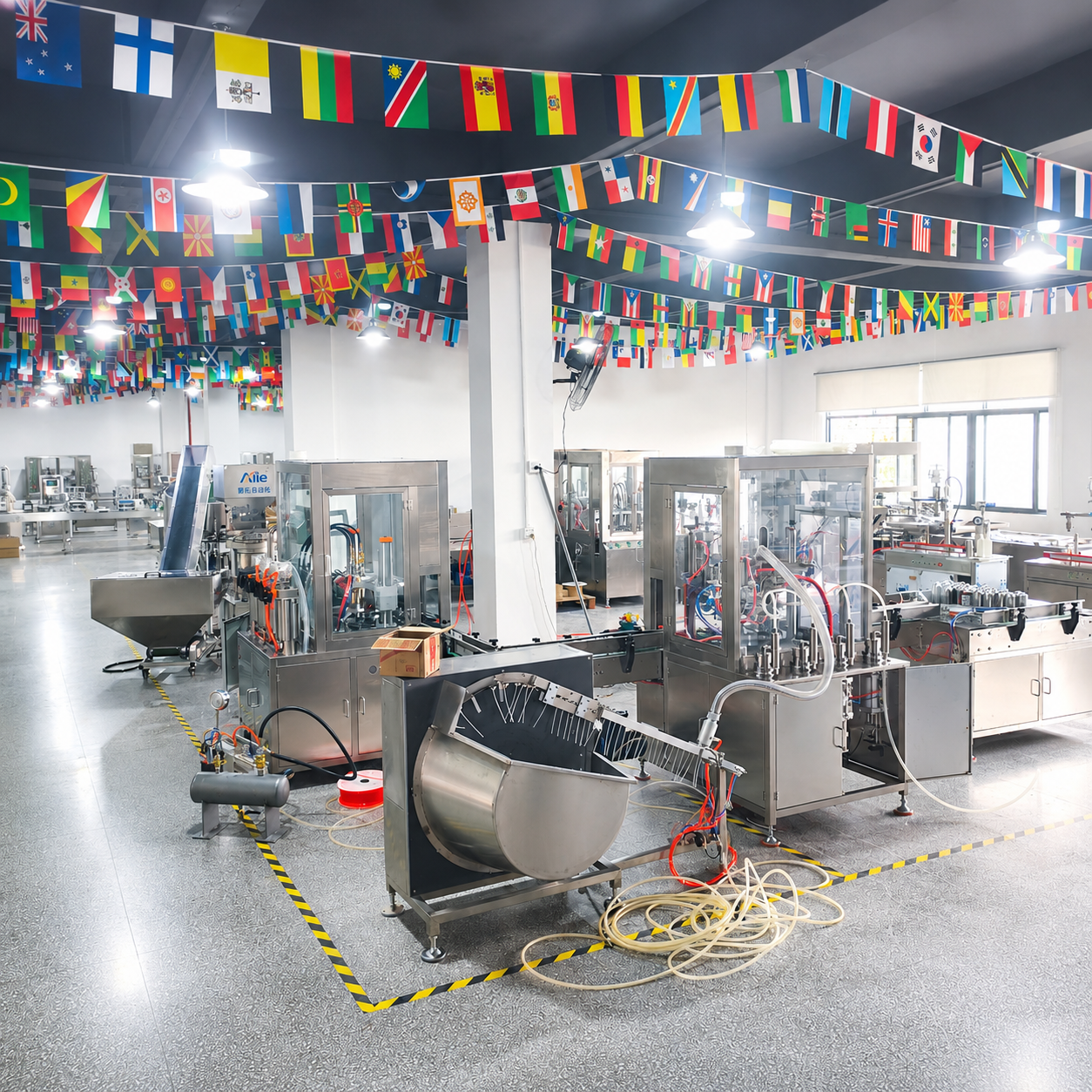
Building an efficient aerosol packaging workshop requires coordinating individual stations so liquid feeding, gassing, and container transfer operate without bottlenecks:
- Liquid Filling Workstation: High-precision stainless steel (SUS304 or SUS316L) metering cylinders equipped with anti-drip diving nozzles to prevent formulation spills onto the can mouth.
- Valve Inserting & Crimping Unit: Vibratory bowl sorters automatically orient valves, while rigid collet crimping heads maintain consistent crimping diameter and depth tolerances.
- Propellant Charging Machine: Specialized high-pressure metering cylinders with pneumatic booster pumps. For small-scale setups, explore our standalone semi-automatic aerosol propellant gas filling machine.
- Conveyor & Downstream Inspection: Anti-static indexing conveyors, checkweighers, water-bath leakage detectors, and automatic cap pressers.
Chapter 3: Formulation & Scent Changeover Considerations
Air freshener contract packers frequently switch between multiple fragrance SKUs (e.g., lavender, citrus, ocean breeze, floral blends). Formulation chemistry directly dictates machine material choices and clean-in-place (CIP) efficiency:
- Solvent vs. Water-Based Formulations: Alcohol-based or solvent-based sprays atomize easily with LPG propellants, while water-based formulations require specialized corrosion-resistant can coatings and DME or nitrogen gas pairings.
- Fragrance Scent Cross-Contamination: Strong essential oils can linger inside fluid pipelines. AILE liquid fillers feature quick-release tri-clamp fittings and polished fluid passages, allowing operators to flush lines rapidly between scent changeovers.
- Liquid Viscosity & Emulsions: Most room sprays are low-viscosity liquids, but gel-to-mist or heavy odor-neutralizing emulsions require adjustable suction speeds and larger nozzle orifices to prevent foaming.
Chapter 4: Semi-Automatic vs. Automatic Production Line Options
Choosing the appropriate equipment scale depends on daily can volume, factory floor space, and the frequency of SKU batch changeovers:
| Equipment Configuration | Typical AILE Capacity | Key Line Features | Recommended Application |
|---|---|---|---|
| Semi-Automatic Workstation | 500–700 CPH | Table-top/modular design; manual valve placing and can transfer | Startups, seasonal runs, small-batch specialty fragrances |
| Standard Rotary Line | 2,400–3,600 CPH | Auto star-wheel indexing, 2-head liquid dosing, auto gassing/crimping | Growing brands, medium-scale continuous commercial production |
| High-Speed Linear Line | 4,800–7,200 CPH | Multi-head filling, continuous water bath, automated packaging | Large contract fillers, high-volume multinational brand supply |
To inspect specific machine frameworks, review our semi-automatic aerosol filling machine, examine our standard aerosol filling line, or explore our complete series of aerosol filling lines.
Chapter 5: How Propellant Choice Affects the Filling Line
The propellant selected for your air freshener dictates workshop safety zoning, gas booster pressures, and sealing head design:
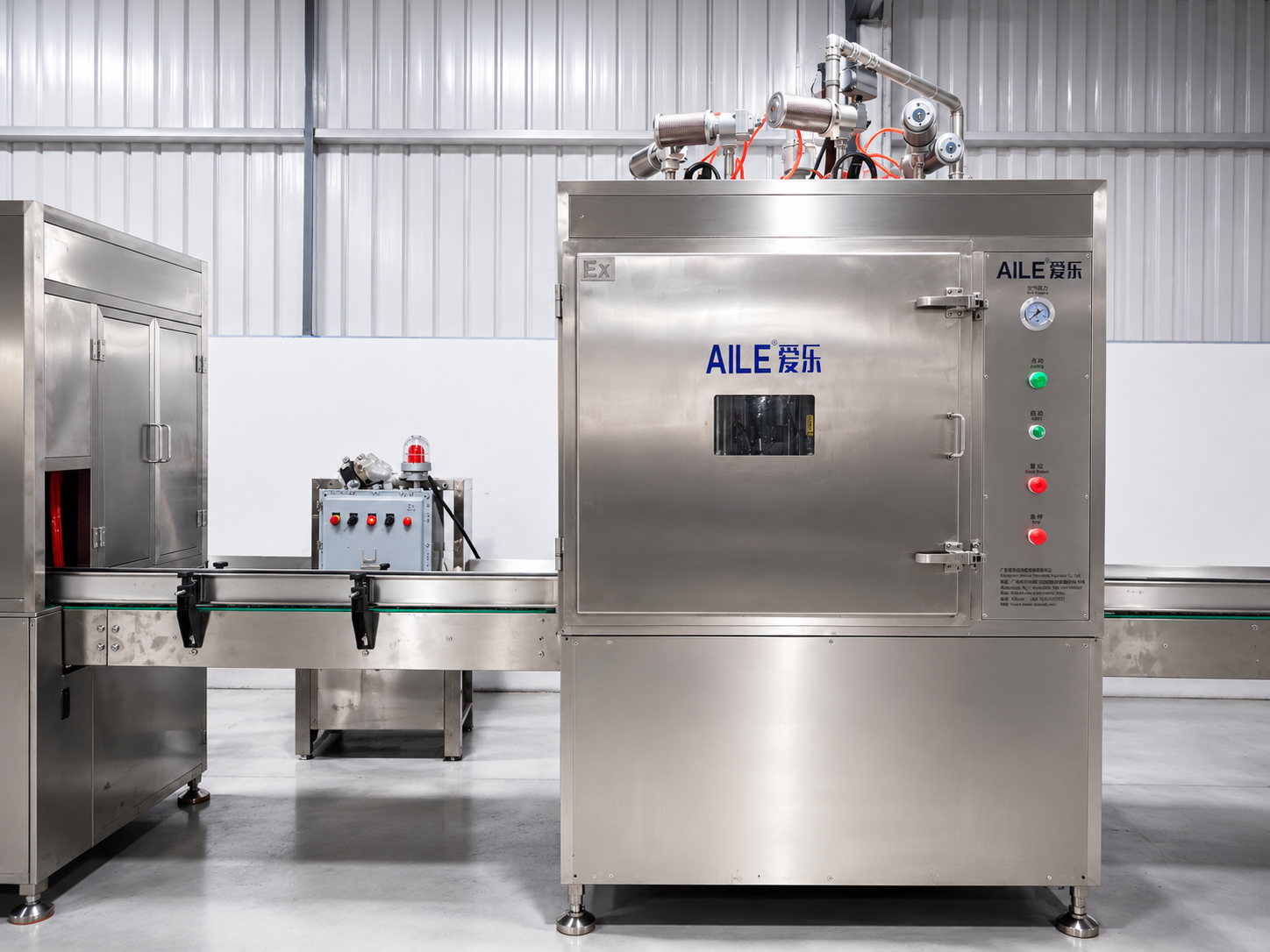
- Hydrocarbon Propellants (LPG / Butane / Propane): Cost-effective and widely used, delivering fine spray atomization. Due to flammability, the propellant filling room requires 100% pneumatic logic controls, forced ventilation, and gas detection sensors.
- Dimethyl Ether (DME): Highly miscible with water-based air freshener formulations, reducing the need for alcohol solvents. DME requires specialized gasket materials (such as PTFE or specific fluoroelastomers) to prevent seal swelling.
- Compressed Nitrogen (N₂) or Compressed Air: Eco-friendly, non-flammable propellants commonly paired with specialized mechanical breakup actuators or Bag-on-Valve packaging.
For an in-depth chemical comparison, read our technical guide on LPG vs DME vs N2 vs CO2 aerosol propellants.
Chapter 6: Technical Parameters to Confirm Before Selecting Equipment
Before purchasing machinery or ordering customized star wheels, confirming your packaging dimensions and chemical specifications ensures seamless factory integration. For a comprehensive inquiry framework, check our guide on how to choose an aerosol filling machine and verify your project parameters against our aerosol filling line RFQ checklist:
- Formulation Characteristics: Solvent-based or water-based? Specific gravity and viscosity profile.
- Filling Volume: Target liquid volume per can (e.g., 150ml, 300ml, 400ml, or 500ml).
- Can Dimensions: Aluminum or tinplate container diameter (e.g., Φ52mm, Φ65mm) and total height.
- Valve & Actuator Profile: Standard 1-inch valve cup, continuous mist spray nozzle, or metered actuator.
- Propellant Type & Injection Pressure: LPG, DME, or compressed gas volume per can.
- Target Output: Desired cans per hour (CPH) for initial launch versus planned phase-two expansion.
- Workshop Utilities: Available compressed air supply (m³/min) and electrical power standards.
Chapter 7: FAQ About Air Freshener Aerosol Production
What machine is used to fill aerosol air fresheners?
Aerosol air fresheners are filled using dedicated aerosol packaging machinery integrating liquid dosing, 1-inch valve crimping, and propellant gas charging. Depending on production scale, manufacturers use compact semi-automatic 3-in-1 workstations or fully automatic indexing lines with inline leak detection.
Can one filling line process different fragrance scents and can sizes?
Yes. By utilizing quick-disconnect fluid lines, adjustable conveyor guard rails, and interchangeable star-wheel pucks, one line can easily switch between different fragrance formulas and can sizes (e.g., 200ml to 400ml) within 30 to 45 minutes.
What is the difference between semi-automatic and automatic air freshener equipment?
Semi-automatic equipment operates at around 500–700 CPH and requires manual operator assistance to place valves and move cans between stations. Fully automatic lines run at 2,400–3,600+ CPH, automatically indexing cans through filling, crimping, gassing, water testing, and capping with minimal manual labor.
What safety features are required for air freshener filling lines?
Because aerosol air fresheners frequently use flammable propellants like LPG, the gassing area must be equipped with pneumatic controls, anti-static conveyors, forced exhaust ventilation, and explosion-proof electrical isolation.
What information should I provide to get an accurate machine quote?
To recommend the right equipment, AILE needs to confirm your can diameter and height, filling volume, propellant type, formulation characteristics, and target production speed in cans per hour (CPH).
Conclusion
Configuring an air freshener aerosol filling line requires balancing formulation chemistry, propellant safety, container dimensions, and output requirements. Whether launching a regional fragrance line with flexible semi-automatic units or commissioning an automated commercial factory line, AILE provides tailored machinery engineered for consistent dosing precision and dependable long-term operation.
Ready to Scale Your Air Freshener Aerosol Production?
Contact our engineering specialists today with your formulation details, can sizes, and target production capacity for a customized technical layout and quotation.
Request Machine Quotation